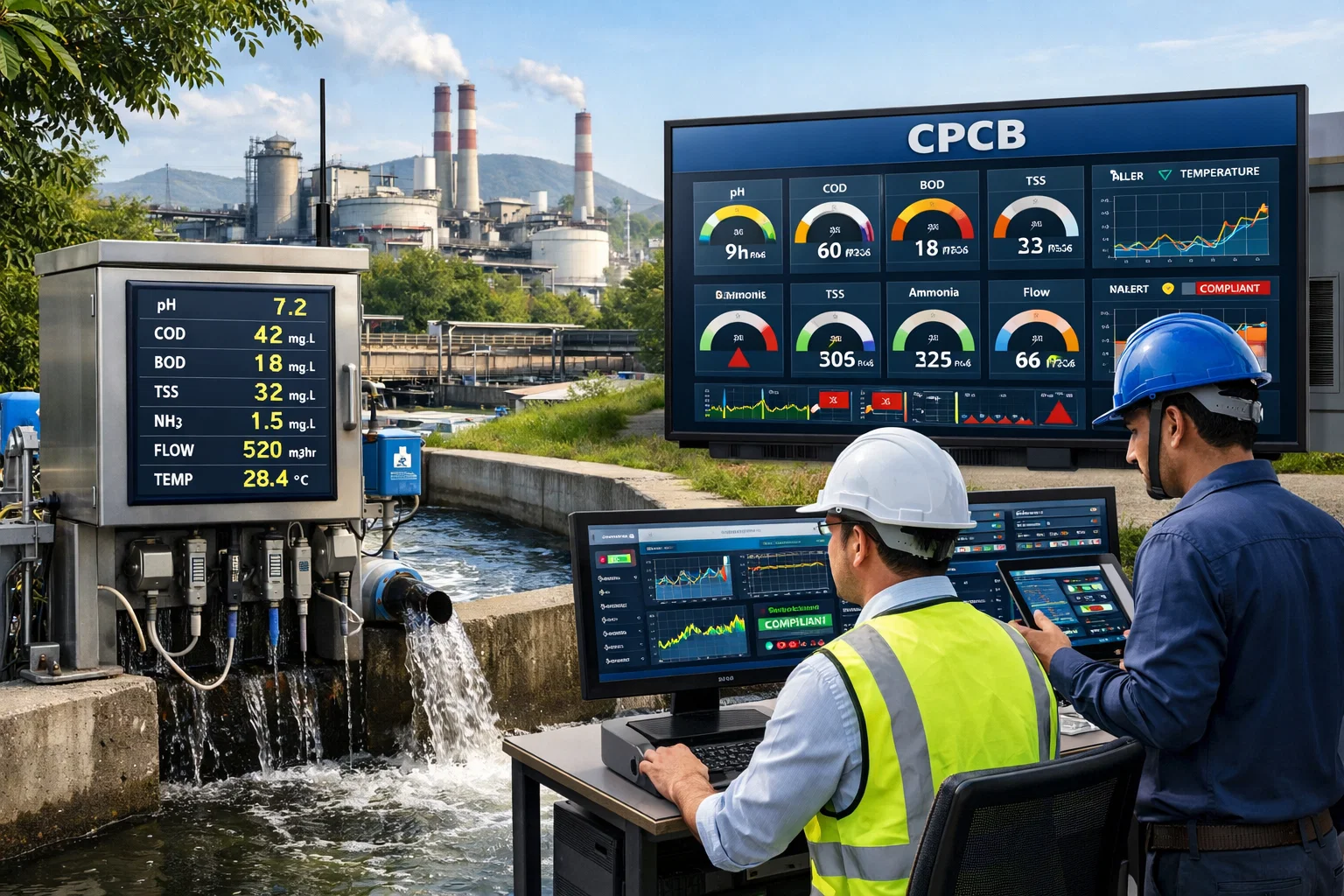
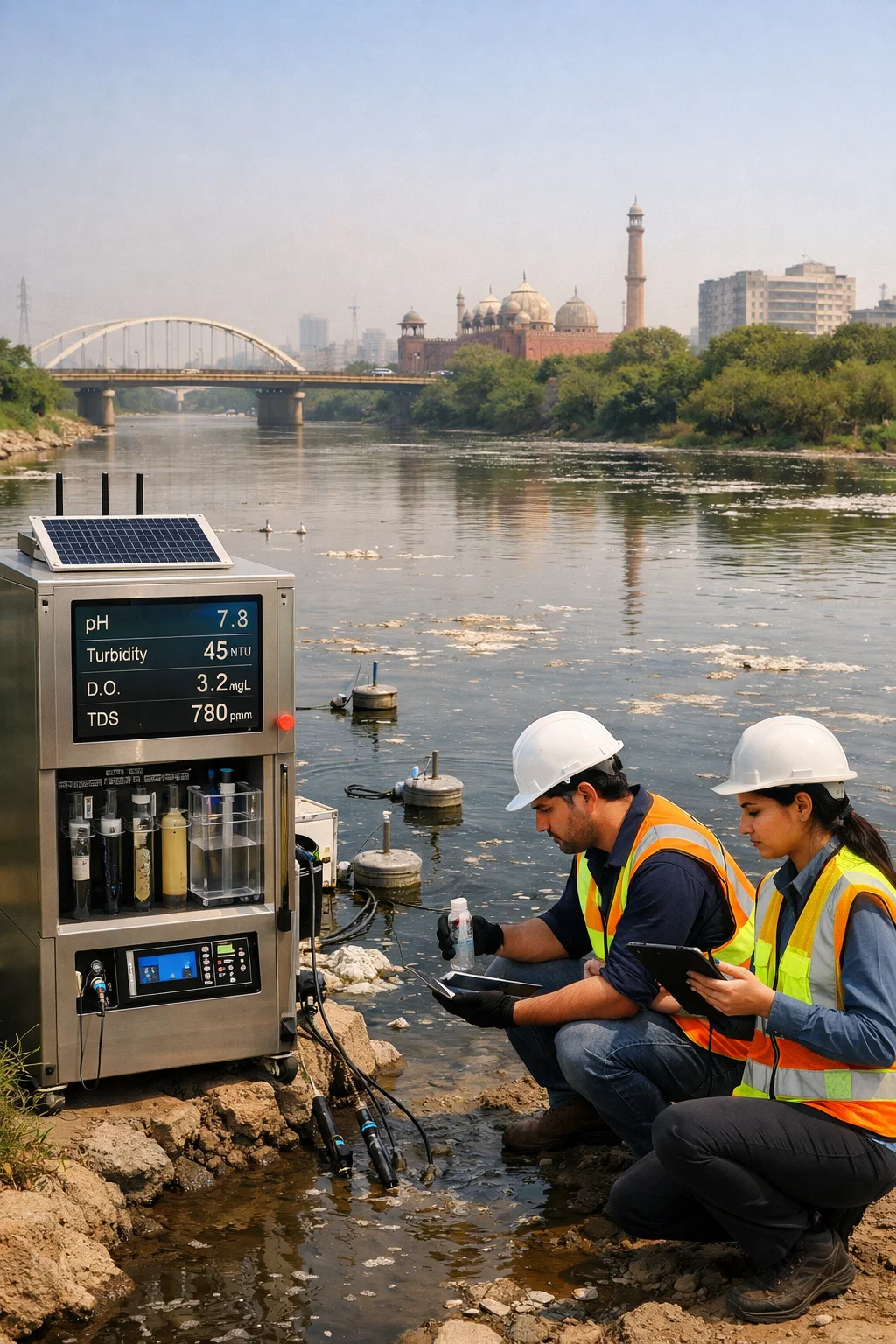
Water Quality Monitoring for STP & ETP Plants in Delhi (CPCB & DPCC Compliance)
Delhi generates enormous volumes of domestic sewage and industrial wastewater, making Sewage Treatment Plants (STPs) and Effluent Treatment Plants (ETPs) critical for protecting the city’s water resources.
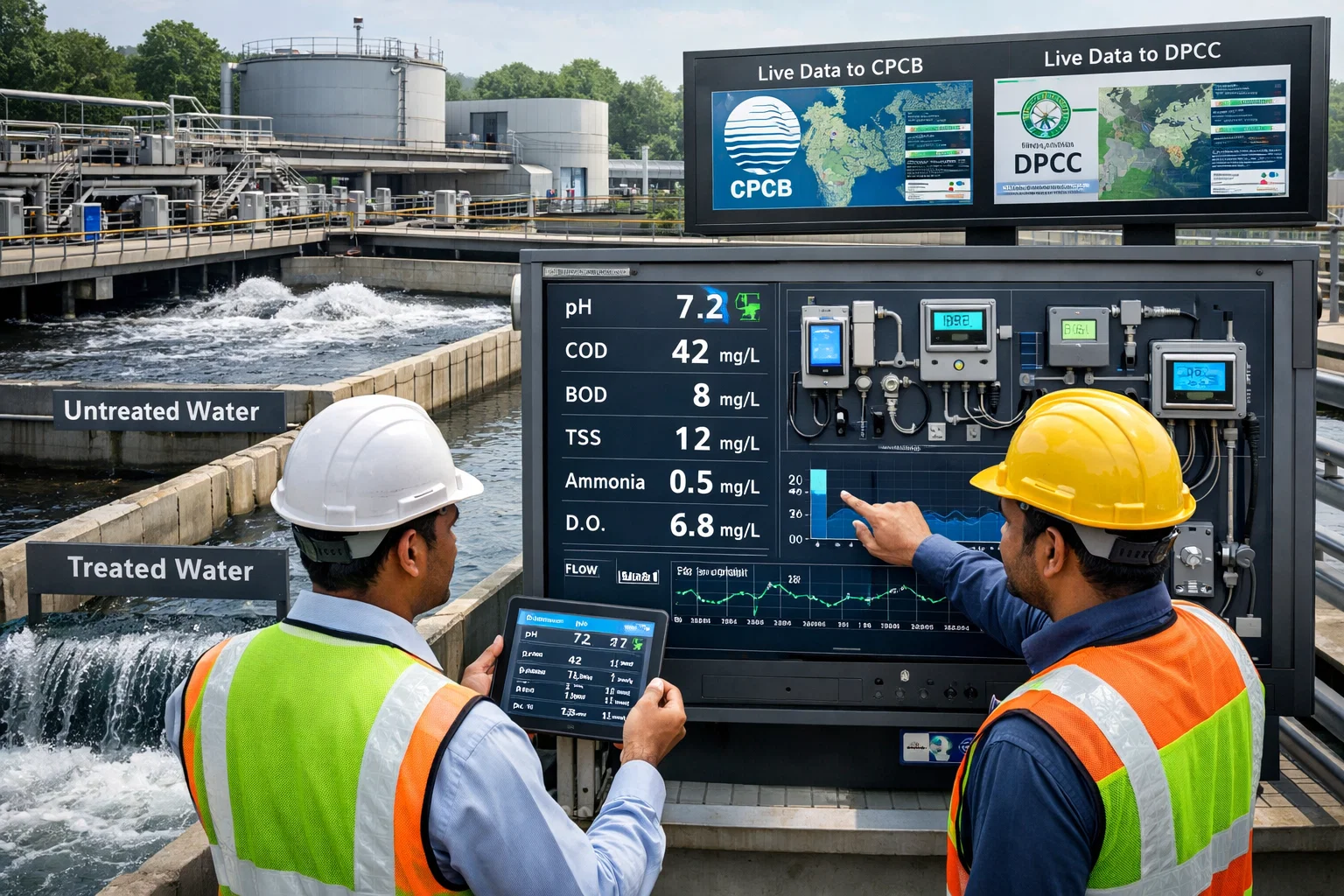
To ensure treated wastewater meets prescribed discharge standards and to safeguard the Yamuna River and groundwater, CPCB and DPCC mandate real-time water quality monitoring for STP and ETP plants across Delhi.
This blog explains the importance of water quality monitoring for STP & ETP plants in Delhi, key regulatory requirements, and how Agua Instruments supports reliable, regulation-ready compliance.
Why STP & ETP Monitoring Is Critical in Delhi
- High hydraulic and organic loading
- Limited land availability in urban areas
- Aging drainage and sewer infrastructure
- Strict CPCB & DPCC enforcement
Any failure in treatment efficiency can directly impact the Yamuna River, groundwater safety, and public health. Hence, continuous and transparent monitoring is mandatory.
CPCB & DPCC Requirements for STP & ETP Monitoring
1. Mandatory Online Monitoring (OCEMS)
- Industrial ETPs
- Large STPs operated by industries, hospitals, hotels, and commercial complexes
- Direct real-time data transmission to CPCB & DPCC servers
2. Key Parameters for STP & ETP Plants
- pH
- BOD (Biochemical Oxygen Demand)
- COD (Chemical Oxygen Demand)
- TSS (Total Suspended Solids)
- Flow
- Conductivity
- Ammonical Nitrogen
- Oil & Grease
Monitoring these parameters ensures treatment performance, discharge compliance, and environmental protection.
What Is an STP & ETP Water Quality Monitoring System?
- Online water analyzers
- Industrial-grade sensors
- Secure data logger
- IoT / GPRS communication module
- CPCB & DPCC server integration
This integrated setup provides 24×7 automated, accurate, and tamper-proof monitoring of treated wastewater.
Benefits of Online Monitoring for STP & ETP Plants
1. Continuous Regulatory Compliance
- 24×7 compliance readiness
- Automated data recording and reporting
- Transparent digital records for inspections
2. Improved Treatment Efficiency
- Optimized aeration and chemical dosing
- Early detection of shock loads
- Stable biological treatment processes
3. Prevention of Environmental Violations
- Immediate corrective actions
- Prevention of non-compliant discharge
- Protection of Yamuna River and groundwater
4. Data-Driven Plant Management
- Performance trending and analysis
- Predictive maintenance
- Process optimization
Challenges Faced by STP & ETP Plants in Delhi
- Space constraints for analyzer shelters
- Power supply and network reliability issues
- Sensor fouling due to high solids load
- Frequent inspections and audits
Agua Instruments’ Solutions for STP & ETP Plants in Delhi
- Online BOD & COD analyzers
- pH, TSS, Flow & Conductivity sensors
- Multi-parameter water quality analyzers
- Secure data loggers with server connectivity
- Online gas analyzers for emission monitoring
Why Choose Agua Instruments?
- CPCB & DPCC-compliant configurations
- High accuracy and long-term stability
- Industrial-grade, low-maintenance design
- Seamless real-time data transmission
- End-to-end installation & support
Typical Installation Locations
- STP / ETP inlet
- STP / ETP outlet (final discharge)
- Treated water reuse points
Applications Across Delhi
- Industrial estates and manufacturing units
- Hospitals and healthcare facilities
- Hotels and commercial complexes
- Large residential STPs
- Infrastructure and utility projects
Conclusion
With strict CPCB and DPCC enforcement, real-time water quality monitoring for STP & ETP plants in Delhi is essential. Continuous online monitoring ensures compliance, improves treatment efficiency, and protects Delhi’s critical water resources.
Agua Instruments — Precision Monitoring. Regulatory Compliance. Sustainable Future.