Real-Time Effluent Monitoring for Industrial Units in Delhi
Delhi, one of India’s most densely populated and industrially active regions, faces increasing pressure on its rivers, groundwater, and urban environment.
To combat pollution and ensure sustainable industrial practices, CPCB and DPCC have mandated real-time effluent monitoring for many industrial units.
This blog highlights the importance of real-time effluent monitoring in Delhi, outlines regulatory requirements, and explains how Agua Instruments helps industries achieve continuous compliance while protecting the environment.
Why Real-Time Effluent Monitoring Is Critical in Delhi
- Strict DPCC consent conditions
- Frequent inspections and audits
- Zero tolerance for pollution violations
Traditional manual sampling and periodic testing are no longer sufficient. Real-time effluent monitoring provides continuous visibility, regulatory assurance, and operational efficiency.
What Is Real-Time Effluent Monitoring?
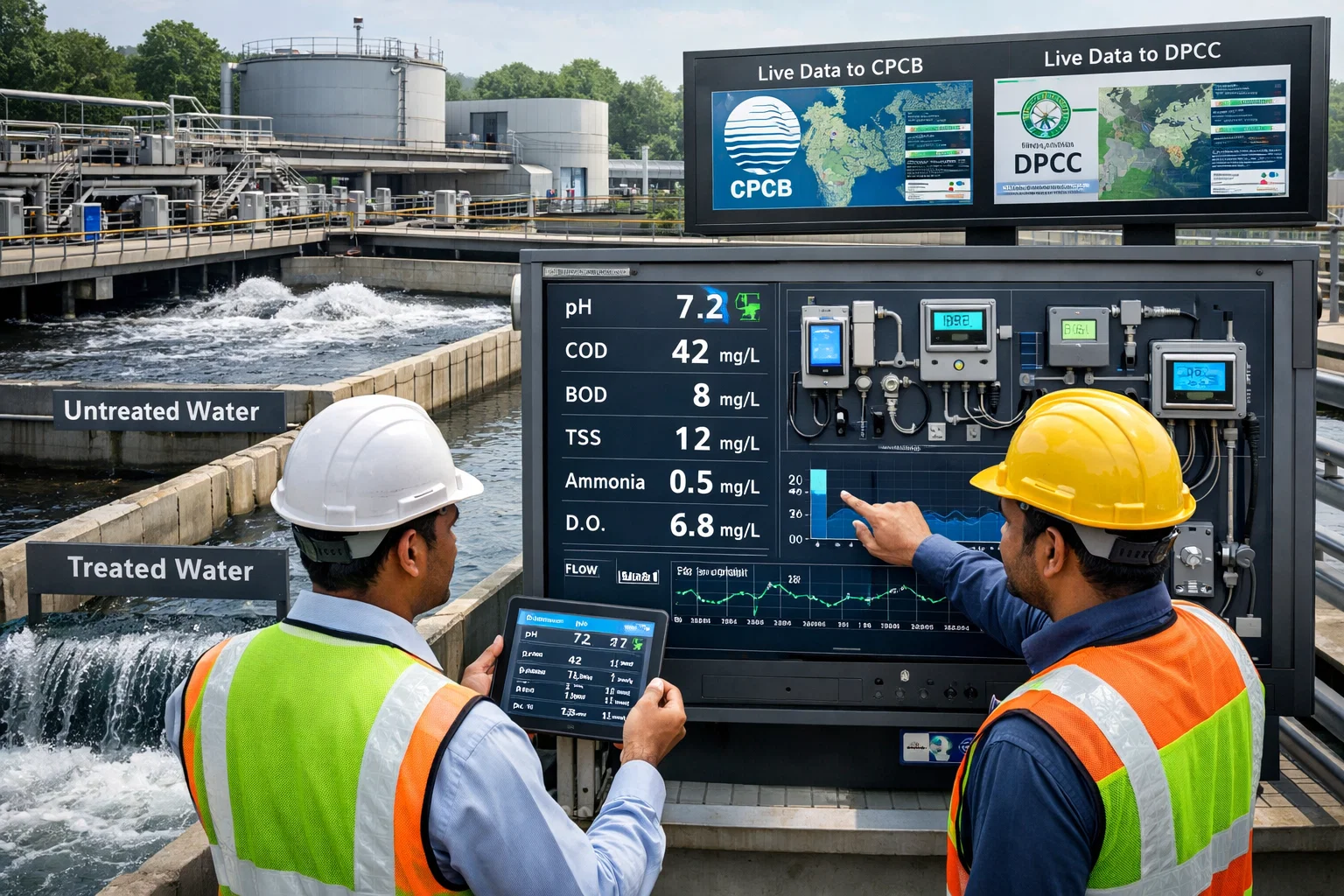
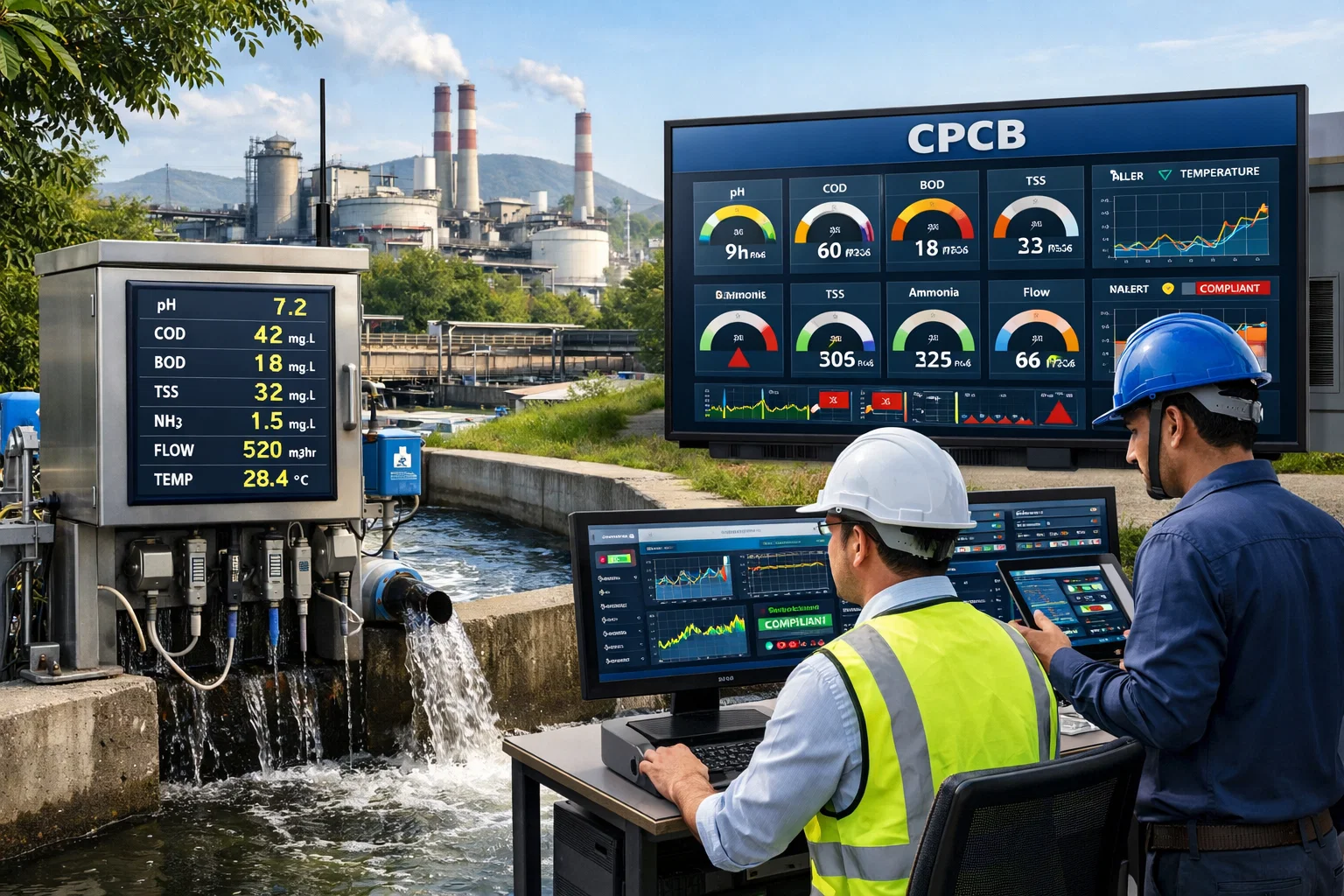
Real-time effluent monitoring involves continuous measurement of wastewater quality using online analyzers and sensors installed at industrial discharge points.
Key Features
- 24×7 continuous monitoring
- Automatic data logging and reporting
- Secure transmission to CPCB & DPCC servers
- Tamper-proof and reliable data handling
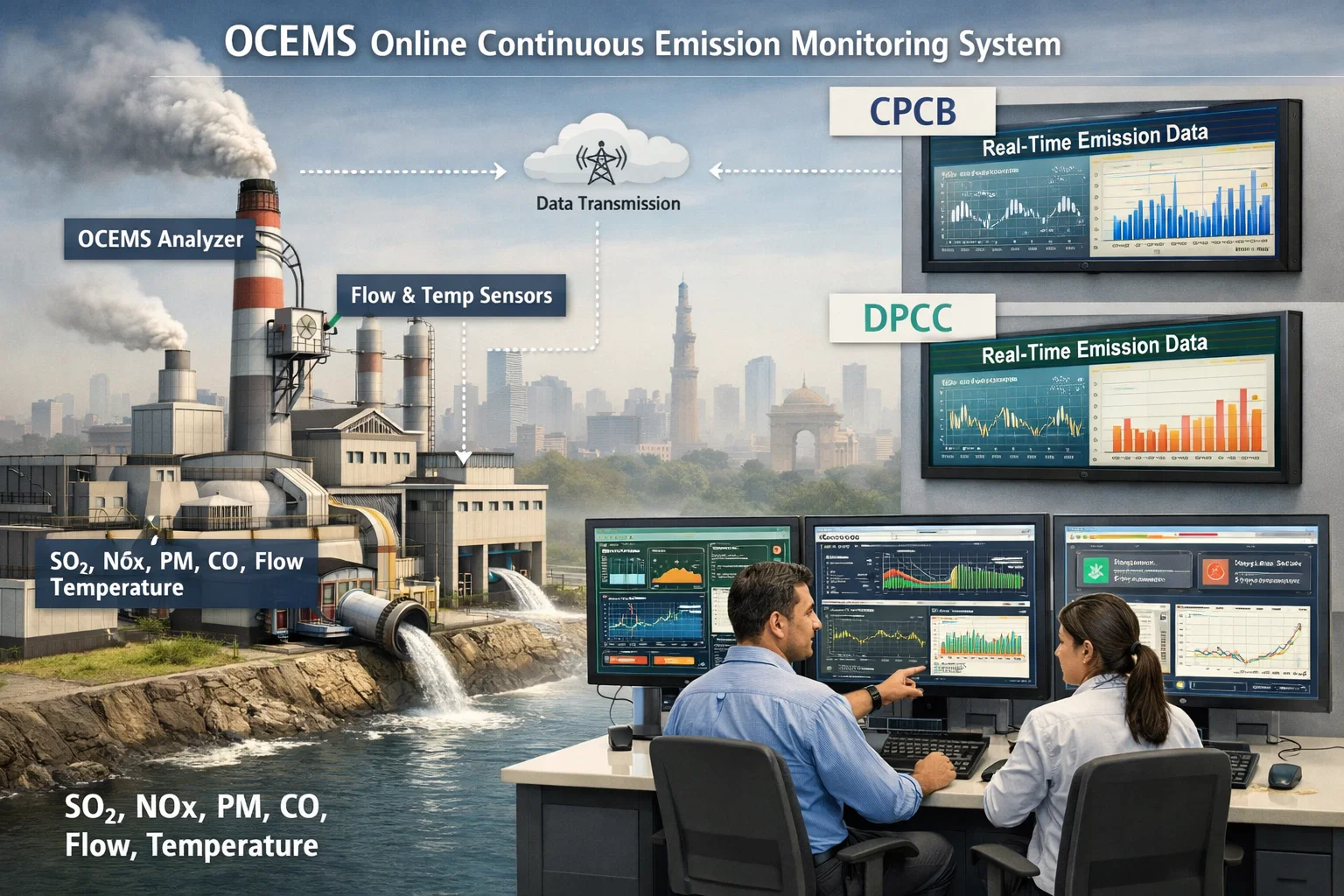
This forms the core of Online Continuous Effluent Monitoring Systems (OCEMS), now mandatory for Red and Orange category industries in Delhi.
CPCB & DPCC Requirements for Industrial Units in Delhi
1. Mandatory OCEMS Installation
- Continuous monitoring of effluent parameters
- Real-time data access for regulators
- No data gaps or manipulation
2. Key Parameters Monitored in Real Time
- pH
- COD (Chemical Oxygen Demand)
- BOD (Biochemical Oxygen Demand)
- TSS (Total Suspended Solids)
- Flow
- Conductivity
- Oil & Grease
- Ammonical Nitrogen
These parameters reflect treatment efficiency and ensure safe discharge into Delhi’s rivers and drains.
3. Data Transmission & System Uptime
- Secure GPRS / LAN / IoT connectivity
- Uninterrupted power supply
- 24×7 system availability
Any disruption in monitoring is treated as non-compliance by DPCC.
Benefits of Real-Time Effluent Monitoring for Delhi Industries
1. Continuous Regulatory Compliance
- Automatic compliance reporting
- Inspection readiness
- Reduced risk of penalties
2. Early Detection of Treatment Failures
- pH shocks
- Sudden COD/BOD spikes
- Flow abnormalities
3. Improved ETP Performance
- Optimized chemical dosing
- Stable biological treatment
- Lower operational costs
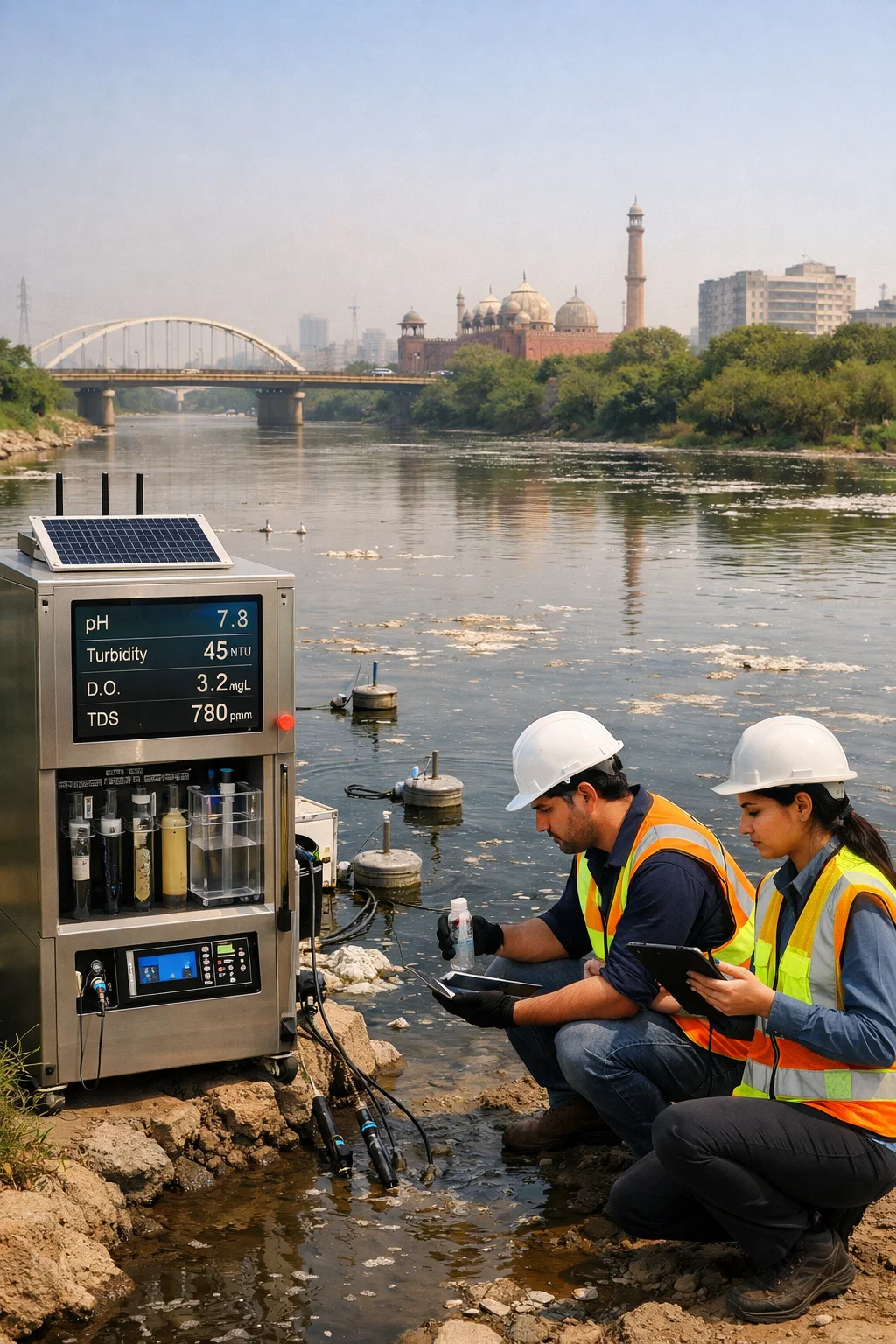
4. Protection of Yamuna River & Water Resources
- Reduced river pollution
- Improved groundwater safety
- Long-term environmental sustainability
5. Enhanced Corporate Reputation
- Strong ESG reporting
- Regulatory transparency
- Public and stakeholder trust
Challenges Faced by Industrial Units in Delhi
- Limited space for analyzer installation
- Power and network reliability issues
- High regulatory pressure
- Frequent DPCC audits
Agua Instruments’ Real-Time Effluent Monitoring Solutions
- Online COD & BOD analyzers
- pH, TSS, Flow & Conductivity sensors
- Multi-parameter water quality analyzers
- Secure data loggers and IoT gateways
- Online gas analyzers for emission monitoring
Why Choose Agua Instruments?
- Proven CPCB & DPCC compliance expertise
- High-accuracy industrial analyzers
- Reliable real-time data transmission
- Complete installation & commissioning
- Ongoing calibration and service support
Industries in Delhi That Require Real-Time Monitoring
- Manufacturing units
- Chemical and pharmaceutical industries
- Food & beverage processing plants
- Power and utility facilities
- Large STPs & ETPs
- Infrastructure projects
Conclusion
For industrial units in Delhi, real-time effluent monitoring is no longer optional—it is mandatory. Strict enforcement by CPCB and DPCC ensures compliance, environmental protection, and operational efficiency.
Agua Instruments — Precision Monitoring. Regulatory Compliance. Sustainable Future.