Accurate air pollution
mapping on a
previously unimaginable scale

Bettair® is a novel smart-city platform providing highly efficient, large-scale air pollution mapping — giving cities the insights they need to protect public health and build cleaner environments.

🌡️ −10 to 40 °C
💧 IP65 Rated
📡 LoRaWAN + 4G
No Field Calibration
R² > 0.93vs Traditional AQM
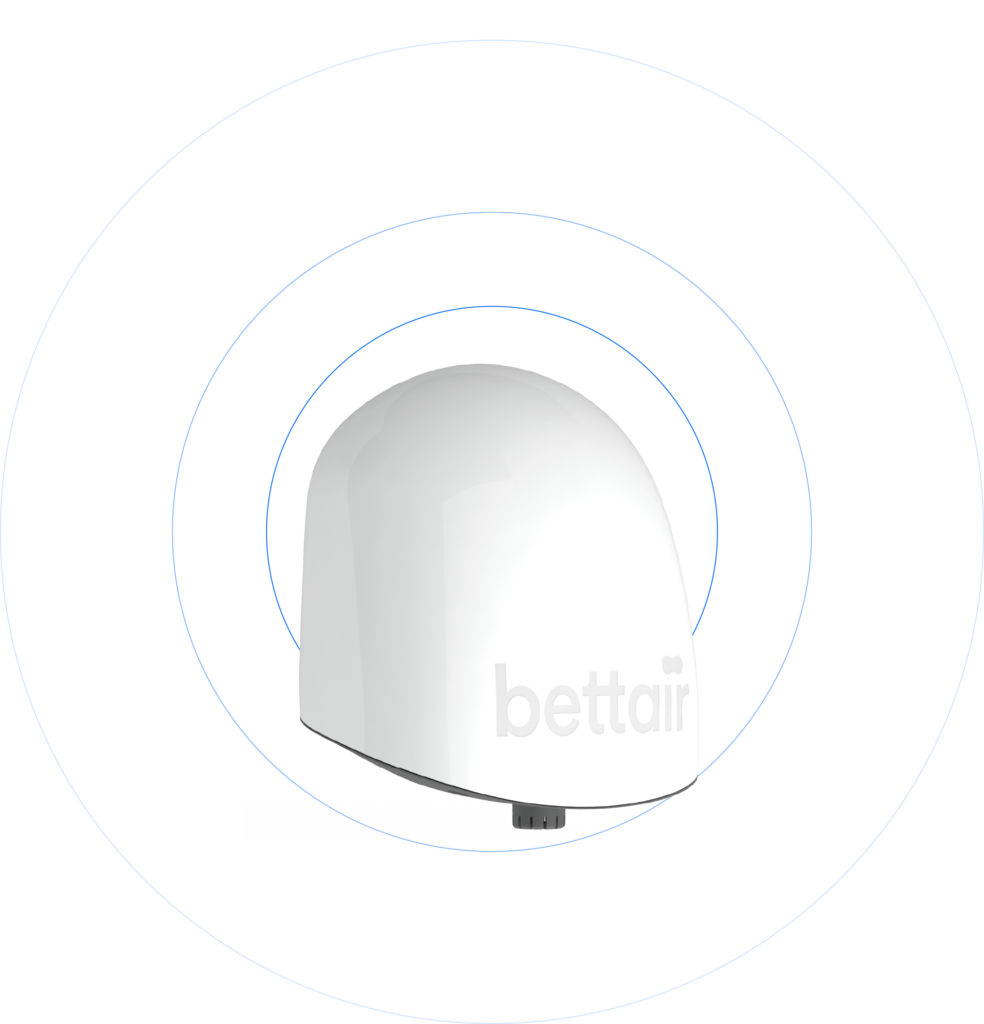
Bettair® air quality monitoring node
IP65Weatherproof
15+Pollutants
Bettair® node device
🔄 Hot-swap sensing cartridge

A node built for the real world

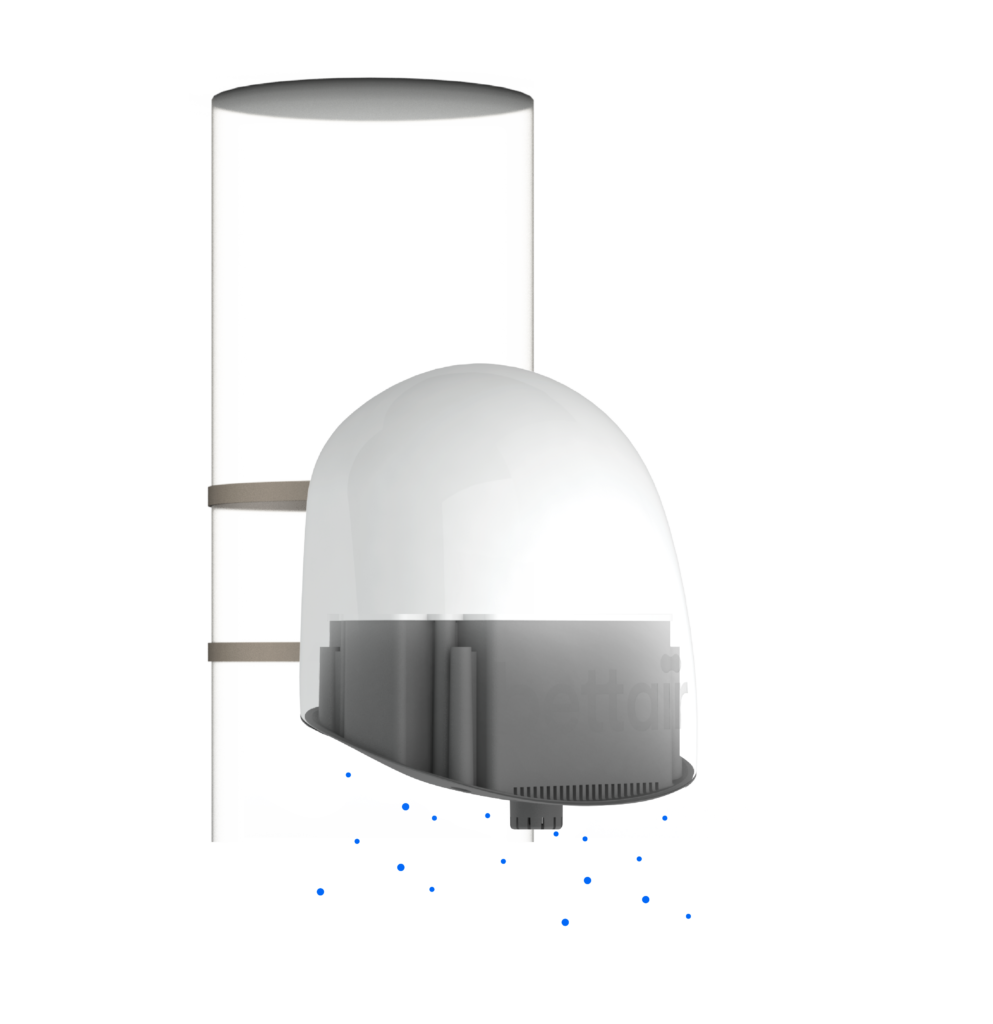
The Bettair® node is a compact, dome-shaped air quality sensor hub engineered for urban outdoor deployment. Its patented sensing cartridge design lets you replace all sensors easily when needed — with no specialist tools and no on-site calibration required.

💧
IP65 Rated Dust-tight & water-resistant for any outdoor urban environment
🔄
Swappable Sensing Cartridge Replace all sensors when required — no in-situ calibration needed
🌡️
Wide Operating Range Full accuracy from −10 °C to 40 °C; up to 95% non-condensing humidity
📡
Dual Wireless Connectivity LoRaWAN and 4G (LTE) for flexible, low-power network deployment
Low-Power Electronics Customised energy-efficient design for long-term autonomous operation

Everything in the air — measured

From fine particulates to trace gases, Bettair® nodes cover the full spectrum of urban air quality indicators, alongside key environmental parameters.

NO₂
Nitrogen Dioxide
O₃
Ozone
NO
Nitric Oxide
CO
Carbon Monoxide
SO₂
Sulfur Dioxide
CO₂
Carbon Dioxide
H₂S
Hydrogen Sulfide
NH₃
Ammonia
VOC
Volatile Organic
CH₄
Methane
HCl
Hydrogen Chloride
PM₁
Particulate Matter
PM₂.₅
Fine Particles
PM₁₀
Coarse Particles
🌡️
Temperature
💧
Rel. Humidity
📊
Atm. Pressure
🔊
Ambient Noise
Variable Range Limit of Detection Resolution Precision Unit
NO₂0 – 20 ppm2 ppb0.1 ppb± 3 ppbppb or µg/m³
O₃0 – 20 ppm1 ppb0.1 ppb± 5 ppbppb or µg/m³
NO0 – 20 ppm2 ppb0.1 ppb± 4 ppbppb or µg/m³
CO0 – 500 ppm30 ppb1 ppb± 30 ppbppb or µg/m³
SO₂0 – 50 ppm10 ppb0.1 ppb± 15 ppbppb or mg/m³
CO₂400 – 10,000 ppm400 ppm1 ppm± 30 ppmppm or mg/m³
H₂S0 – 50 ppm2 ppb0.1 ppb± 10 ppbppm or mg/m³
NH₃0 – 60 ppm6 ppb0.3 ppb± 10 ppbppb or µg/m³
VOC0 – 100 ppm20 ppb1 ppb± 1 ppmppb or mg/m³
CH₄0 – 50,000 ppm250 ppb10 ppm± 250 ppbppm or mg/m³
HCl0 – 20 ppm5 ppb0.1 ppb± 15 ppbppb or mg/m³
PM₁0 – 1,000 µg/m³1 µg/m³1 µg/m³± 2 µg/m³µg/m³
PM₂.₅0 – 1,000 µg/m³1 µg/m³1 µg/m³± 2 µg/m³µg/m³
PM₁₀0 – 1,000 µg/m³1 µg/m³1 µg/m³± 2 µg/m³µg/m³

Built for cities, governments & researchers

Whether managing urban health policy, enforcing environmental regulations, or conducting climate research — Bettair® gives you the precise, scalable data you need.

🛡️
Mitigate Air Pollution
Identify hotspots and track real-time concentrations to drive targeted intervention strategies.
🔍
Identify Unknown Sources
Dense sensor networks reveal hidden or previously undetected sources of pollution across urban areas.
💰
Revenue via Enforcement
Evidence-based fine generation for polluters, backed by high-accuracy, legally defensible sensor data.
📉
Assess Environmental Actions
Measure the real-world impact of low-emission zones, green infrastructure, and policy changes over time.
🗺️
Zone Classification
Categorize city zones by air quality level for urban planning, zoning, and public health decisions.
🔮
Forecast Pollution Episodes
Use continuous data streams to predict high-pollution events and issue early public health warnings.
🌱
Climate Change Monitoring
Long-term data supports carbon tracking, climate reporting, and green city commitments.
💸
Reduce Pollution Costs
Early detection and targeted action lowers health, economic, and environmental remediation costs.

How air pollution affects the human body

Outdoor air pollution kills 4.5 million people annually — mostly in cities. Understanding which pollutants affect which organs is the first step to taking action.

🧠
Particulate Matter (PM)
Central Nervous System
Fine particles cross the blood-brain barrier, linked to cognitive decline and neurological damage.
🫀
O₃, PM
Heart Disease
Ozone and particulates increase risk of cardiovascular disease and heart attacks.
🫁
Particulate Matter (PM)
Lungs & Respiratory System
Causes asthma, reduced breathing capacity, and chronic obstructive pulmonary disease (COPD).
🩸
NO₂
Liver, Spleen & Blood
Nitrogen dioxide disrupts the oxygen-carrying capacity of red blood cells.
👁️
O₃, PM, NO₂, SO₂, NH₃
Eyes, Nose & Throat
Multiple pollutants cause irritation of mucous membranes and the upper respiratory tract.
🧬
Particulate Matter (PM)
Reproductive System
Long-term PM exposure is associated with hormonal disruption and adverse birth outcomes.